 SynthMaker
 (opens in a new tab)
Diodes
Diode Pedal Starter
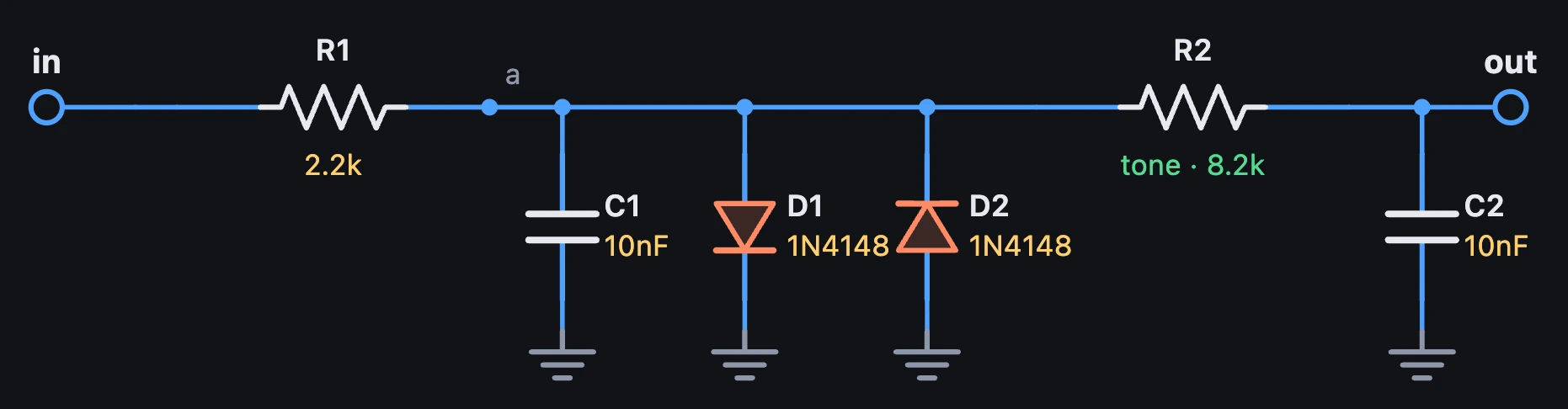
What Start from circuit gives you: a resistor into two silicon diodes, then a tone control. Change it into anything.
Open the example sound: Diode Pedal Starter ↗ (opens in a new tab)Pedals, filters and boosters, each a real circuit you can open, play and change. Each opens in SynthMaker with a sound that suits it.
(opens in a new tab)
What Start from circuit gives you: a resistor into two silicon diodes, then a tone control. Change it into anything.
Open the example sound: Diode Pedal Starter ↗ (opens in a new tab)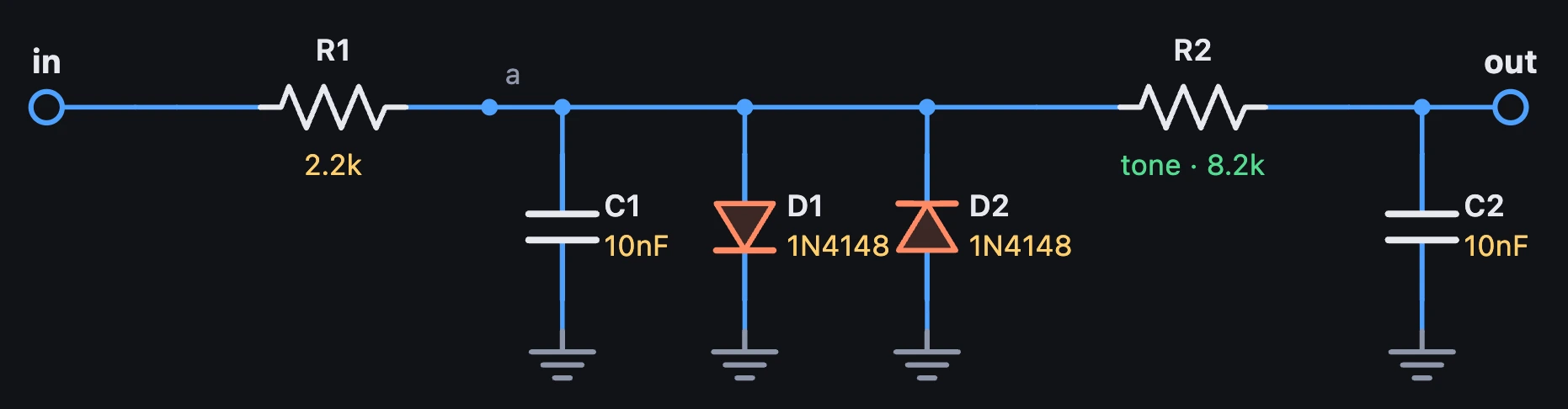 (opens in a new tab)
The same heart with a softening capacitor: two silicon diodes clip the sound at about ±0.6 V.
Open the example sound: Diode Pedal ↗ (opens in a new tab)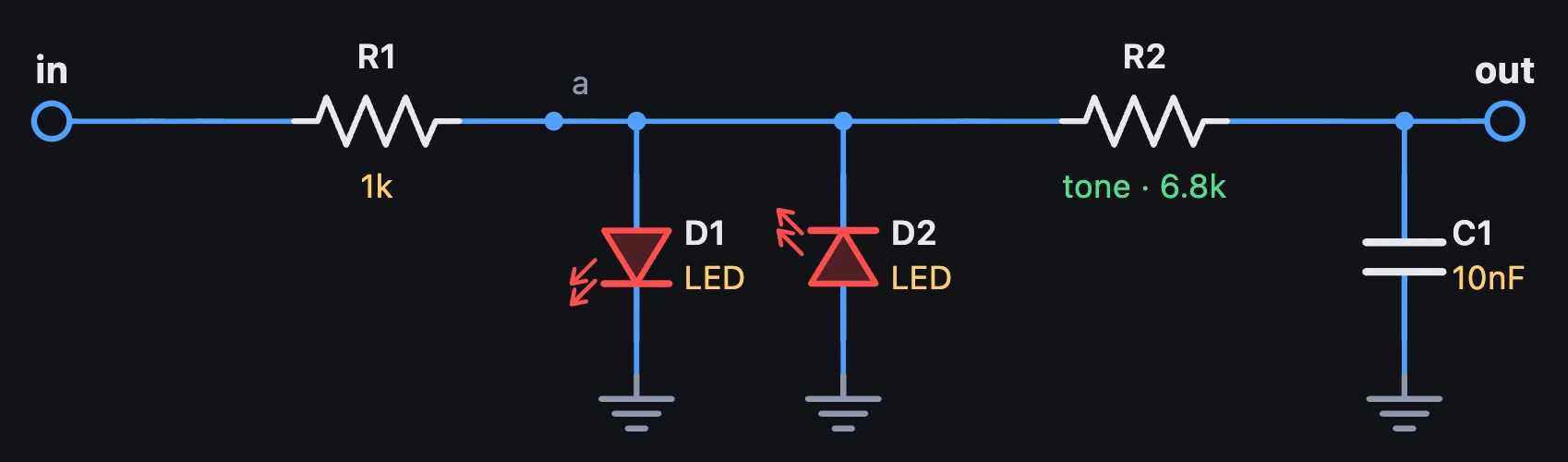 (opens in a new tab)
Two red LEDs instead: they clip near ±1.7 V, so it stays louder and more open before it breaks up.
Open the example sound: LED Clipper ↗ (opens in a new tab)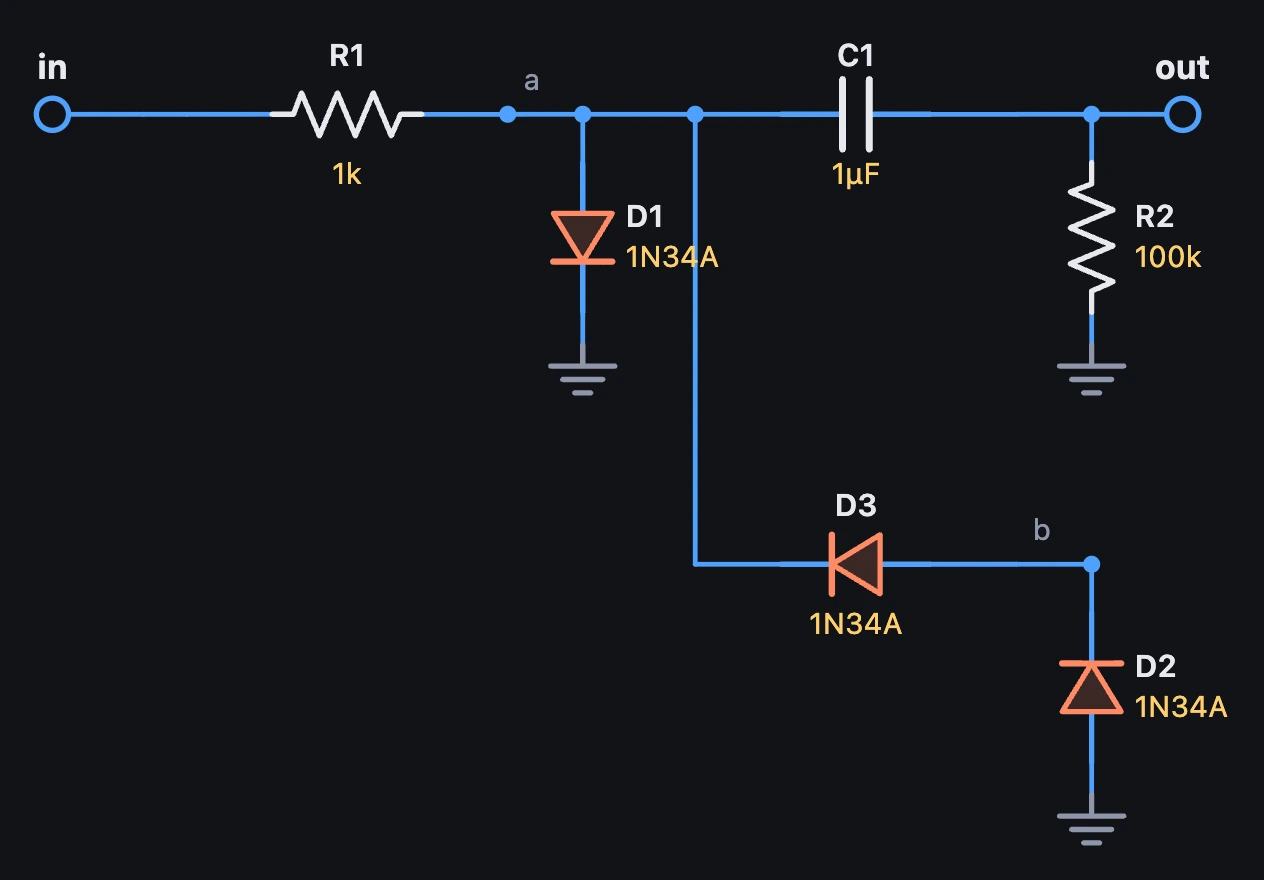 (opens in a new tab)
One germanium diode one way, two the other: the halves of the wave bend differently, a warm growl.
Open the example sound: Germanium Bass ↗ (opens in a new tab)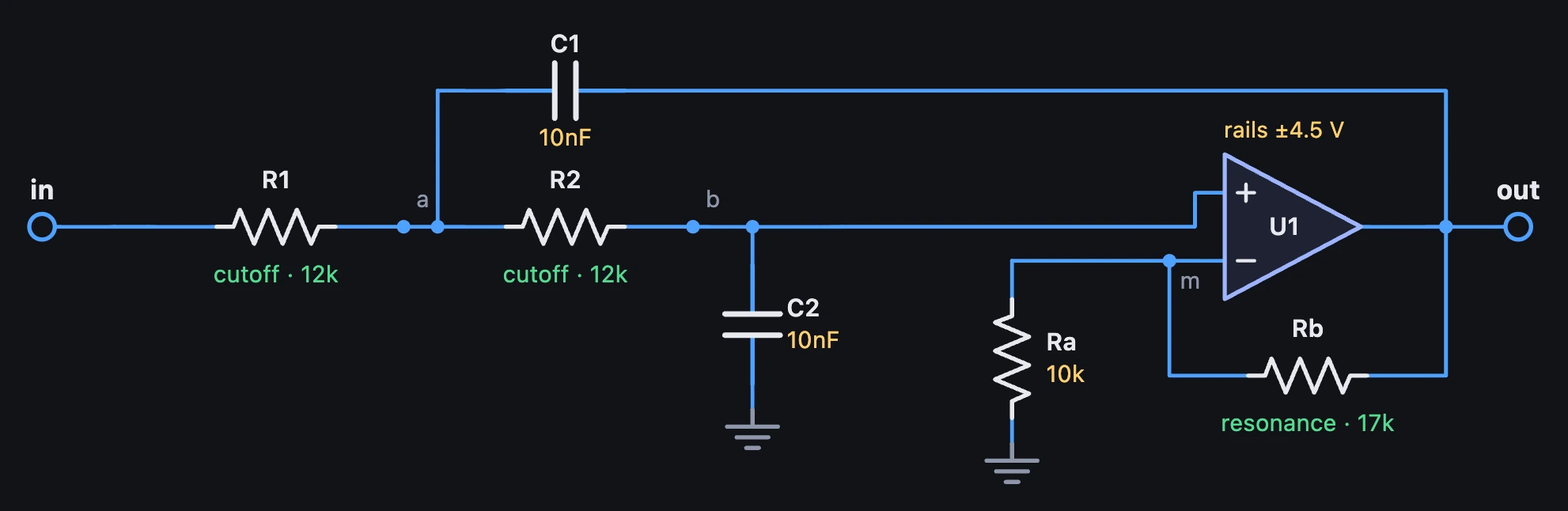 (opens in a new tab)
A resonant low-pass round an op-amp, with Cutoff and Resonance knobs; near the top of Resonance it sings.
Open the example sound: Sallen-Key Bass ↗ (opens in a new tab)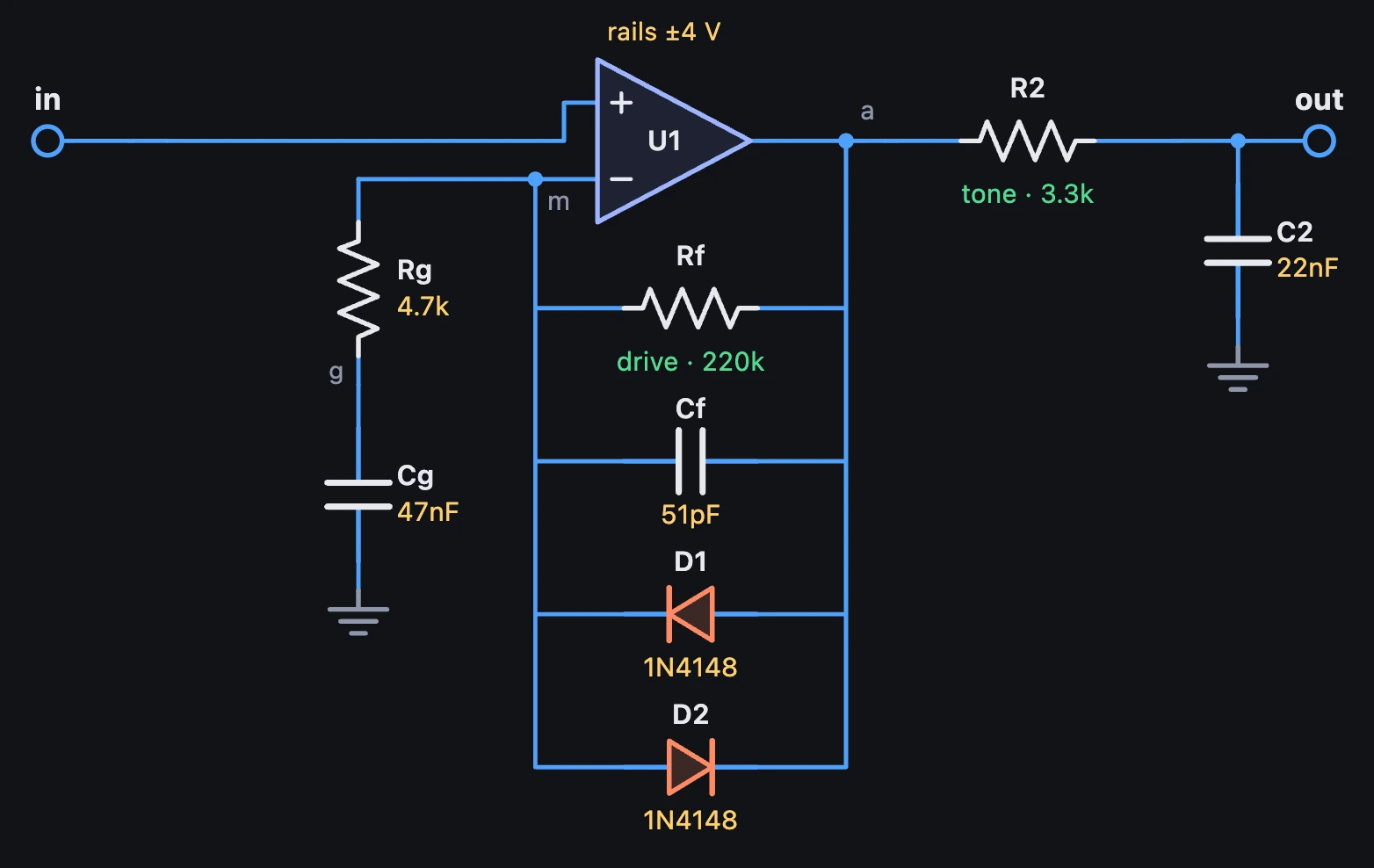 (opens in a new tab)
A classic green overdrive's clipping stage: diodes in the op-amp's feedback, soft round clipping and a mid hump.
Open the example sound: Green Overdrive ↗ (opens in a new tab)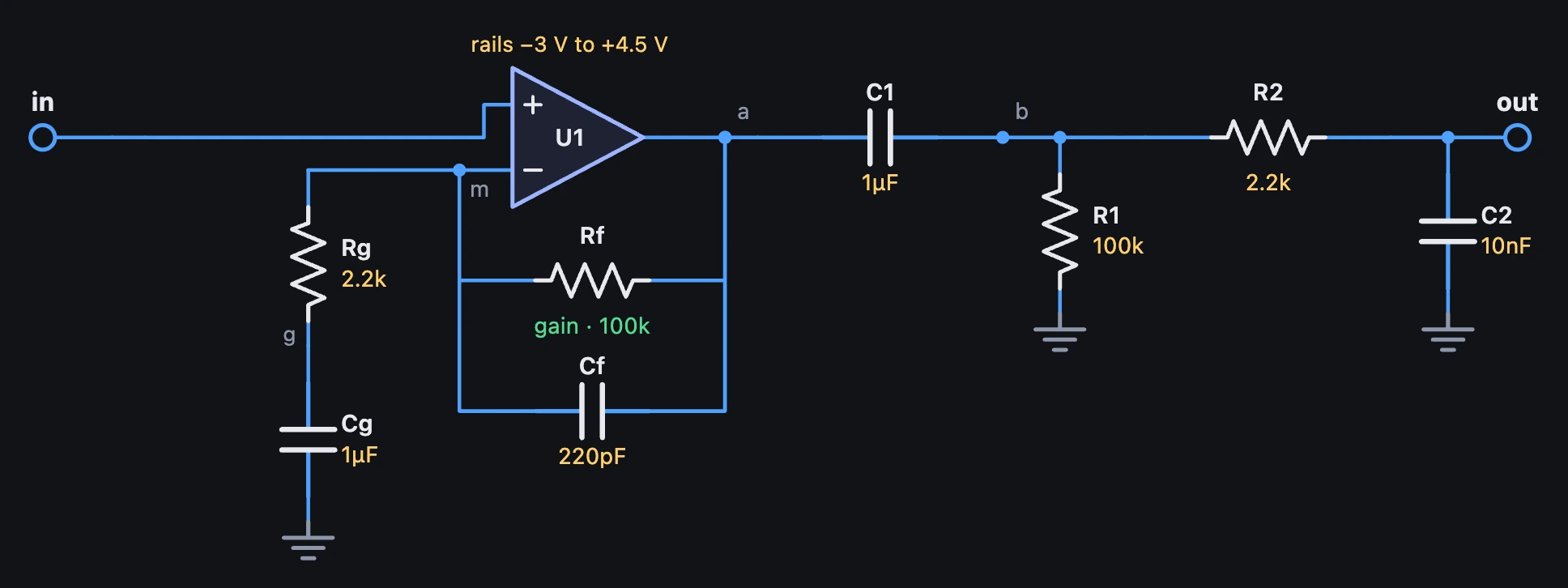 (opens in a new tab)
A gain stage driven into lopsided rails: loud parts squash flat, the two halves differently.
Open the example sound: Rail Squash ↗ (opens in a new tab)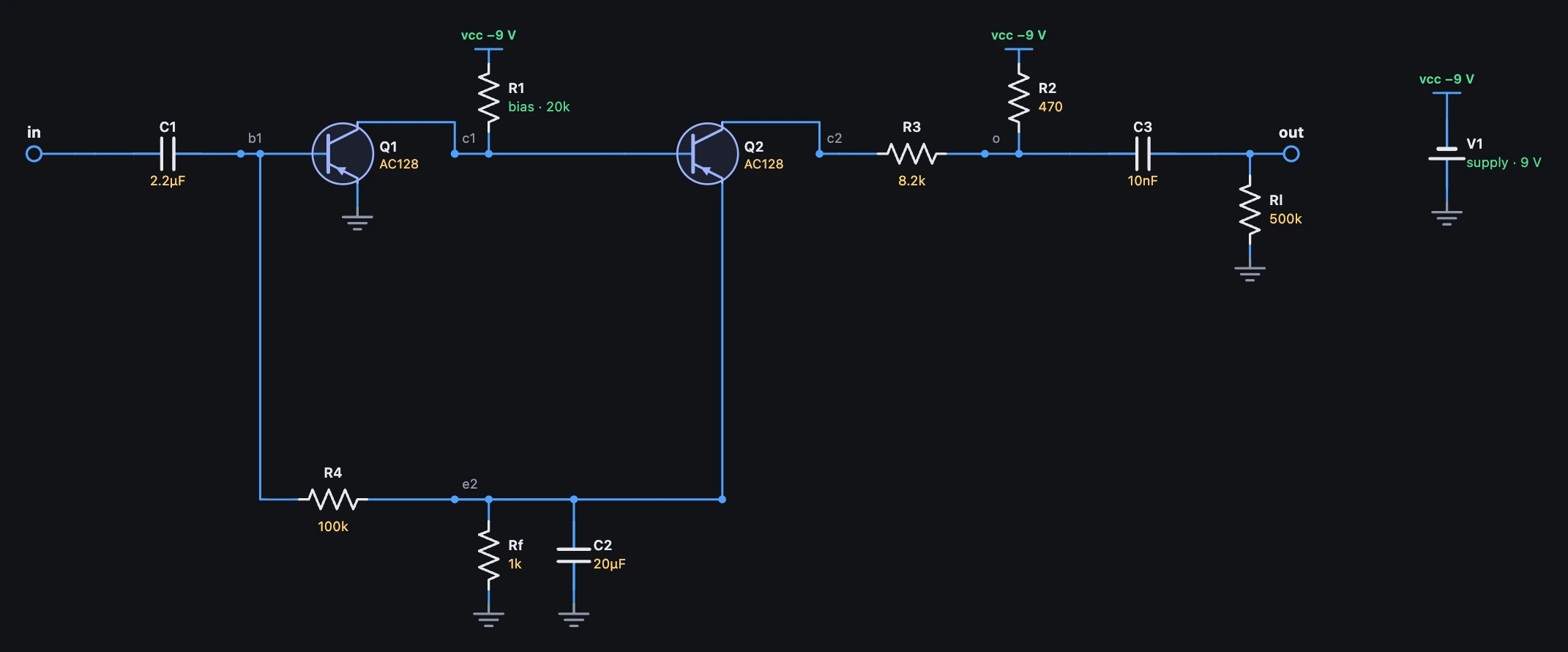 (opens in a new tab)
Two germanium transistors from the sixties: thick, buzzy clipping, with Bias and a Supply that runs down like a battery.
Open the example sound: 1966 Fuzz ↗ (opens in a new tab)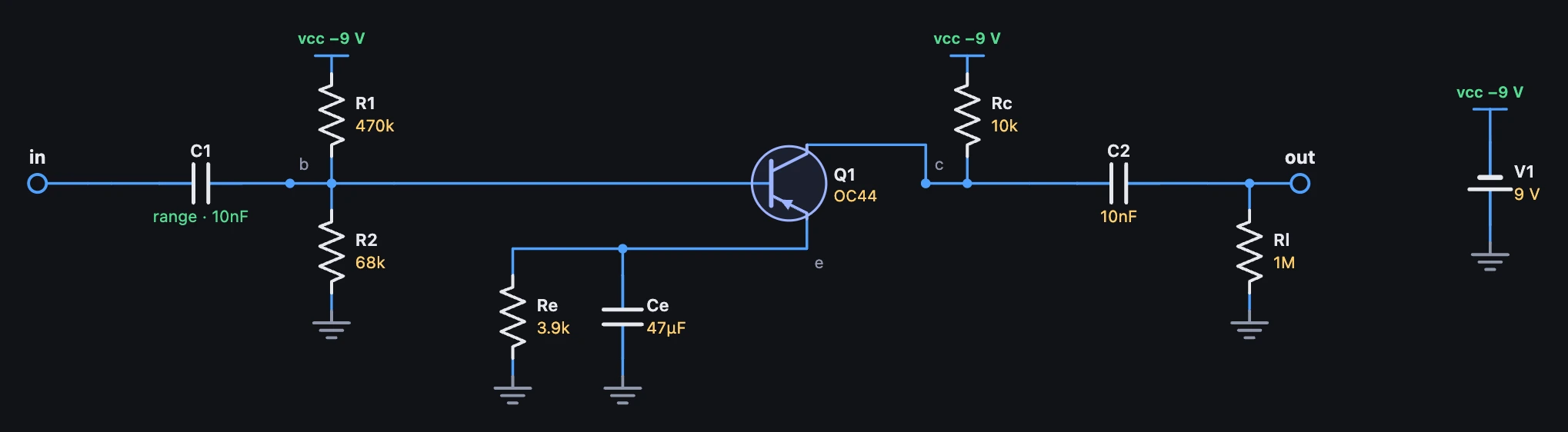 (opens in a new tab)
One germanium transistor that boosts only the highs: a dark sound comes out bright, with a little grit.
Open the example sound: Treble Booster ↗ (opens in a new tab)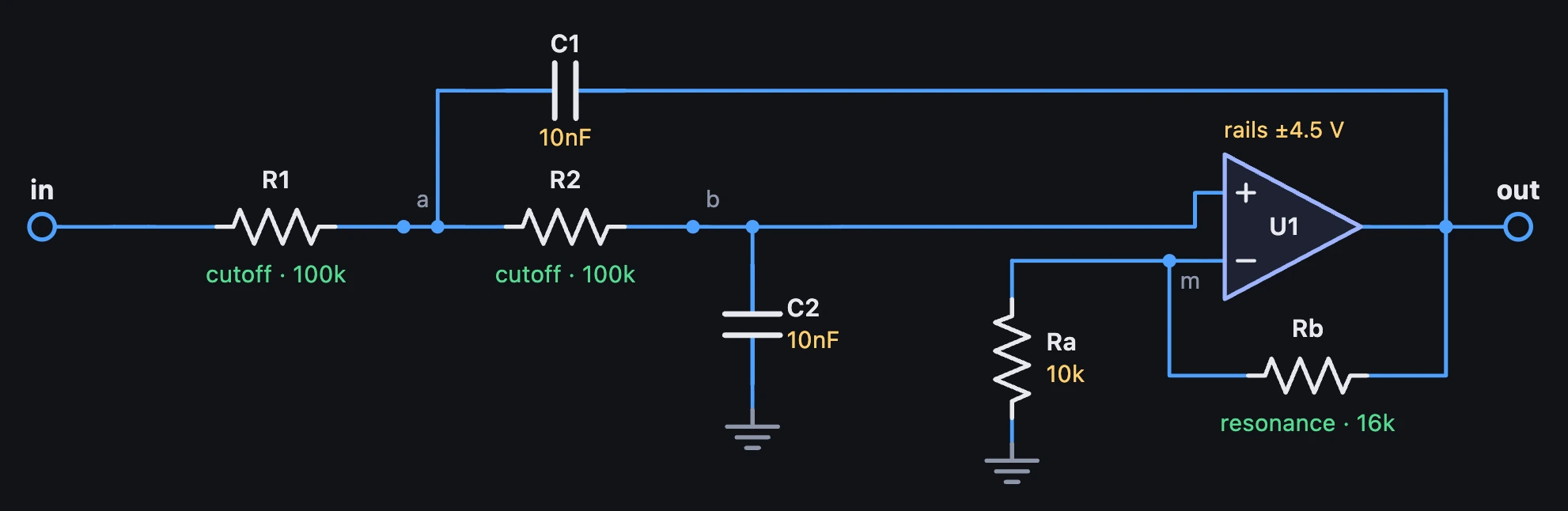 (opens in a new tab)
A resonant low-pass whose cutoff an Envelope sweeps on every note: a bass. Best on headphones.
Open the example sound: Swept Sallen-Key ↗ (opens in a new tab)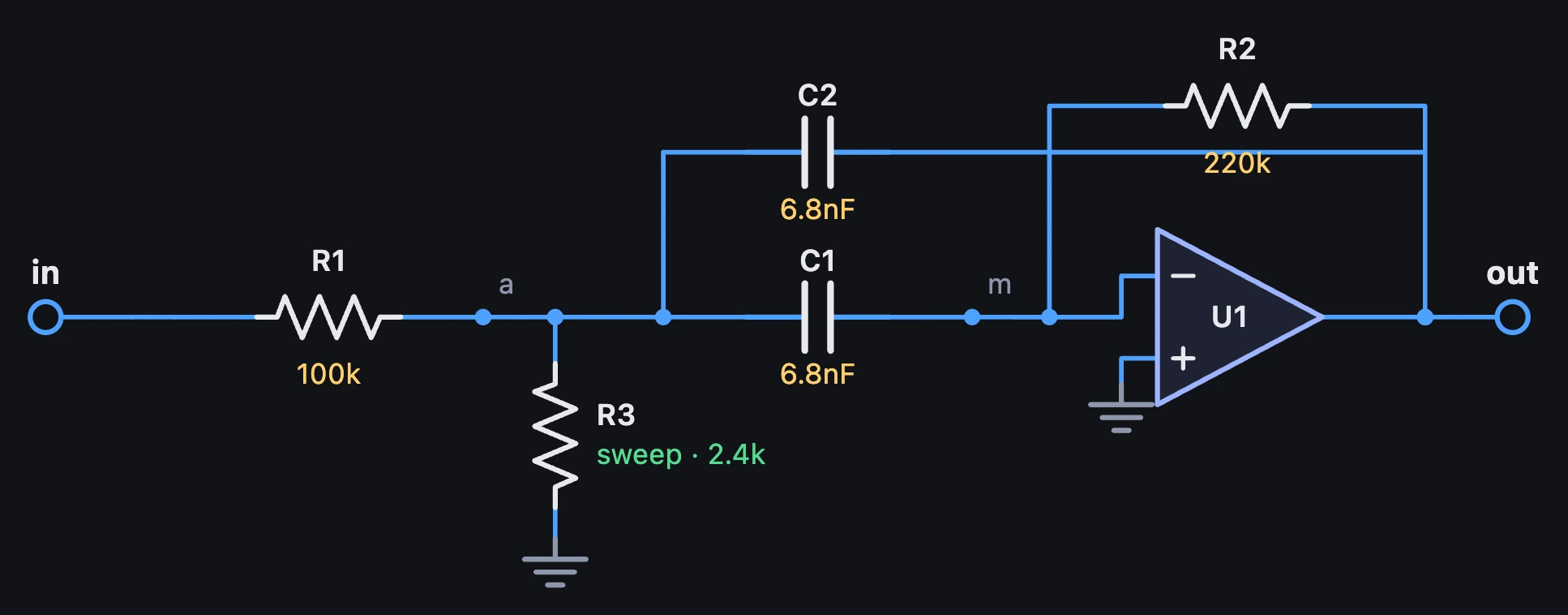 (opens in a new tab)
An op-amp band-pass that an LFO rocks from about 460 Hz to 2.3 kHz, once a beat.
Open the example sound: Circuit Wah ↗ (opens in a new tab)Resistors, capacitors, diodes, op-amps, bipolar transistors and supplies; one input and one output. A circuit holds up to 32 parts, 12 capacitors, 8 diodes, 4 op-amps, 4 transistors, 4 supplies and 12 settings.
Op-amps are ideal, with optional rails they clip against. Coils and field-effect transistors aren't parts, and a parts list that uses one says so in plain words.